
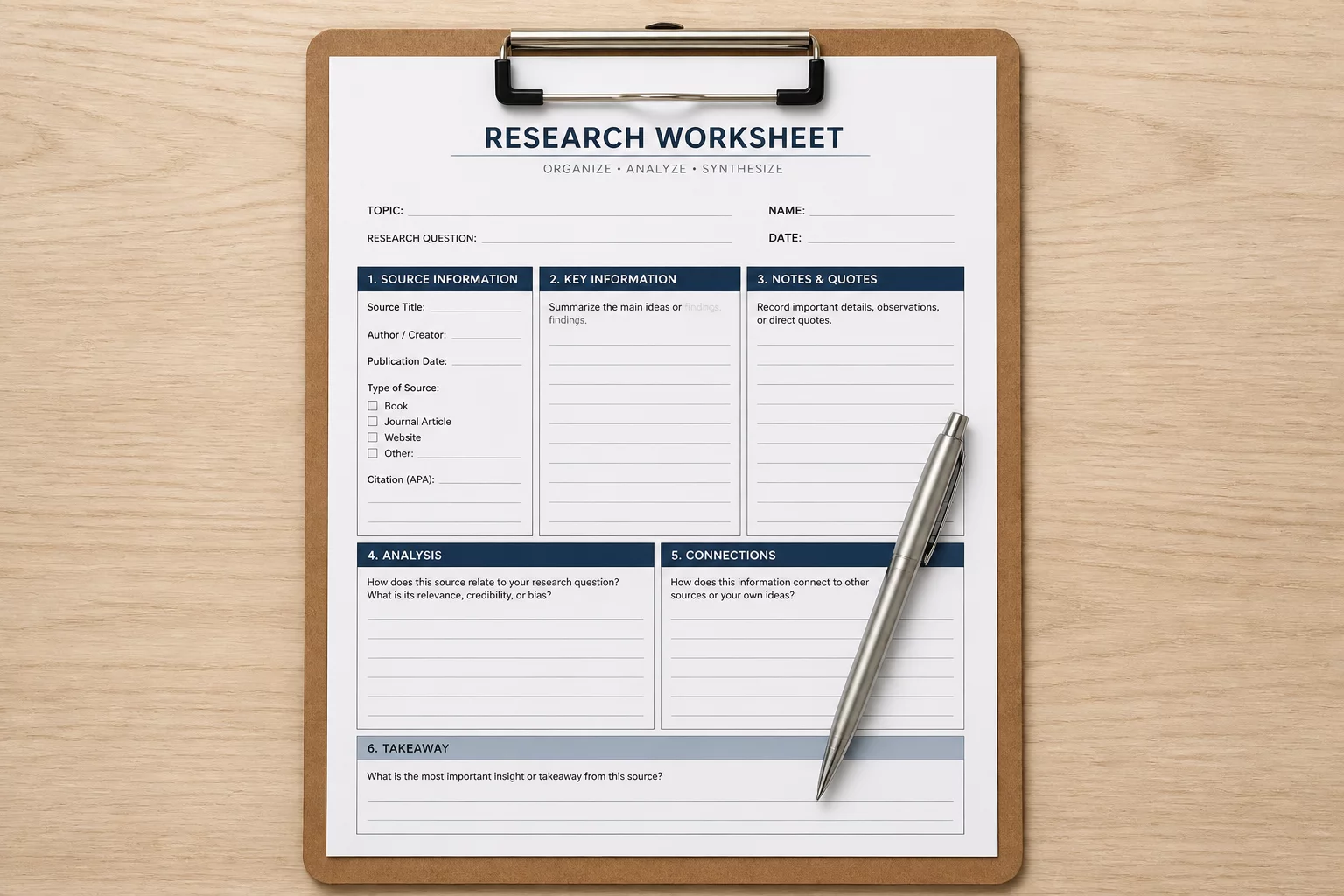
Systematic web inquiries rarely travel in straight lines; instead, initial keywords evolve rapidly as each retrieved document exposes specialized nomenclature and unexplored references. Without deliberate tracking, researchers frequently lose the reasoning behind critical pivot points.
The Research Route Worksheet establishes an explicit breadcrumb trail for analytical browsing sessions. By separating initial suppositions from emerging discoveries, this protocol compels investigators to log the precise stimulus behind every query modification. When an analytical audit occurs months later, team members can reconstruct why certain evidentiary branches received deep examination while alternative routes were pruned.
Deploying the Multi-Stage Audit Protocol
Effective deployment relies on three baseline habits: recording exact search strings prior to execution, noting the unexpected nomenclature uncovered within secondary citations, and benchmarking stopping criteria before fatigue degrades verification rigor. Using this worksheet safeguards investigations against cognitive bias and circular searching loops.
Key Investigation Parameters
- Core Logging Unit: Query Evolution Triad
- Audit Compatibility: NIST & OSINT Standards
- Route Tracing Depth: Multi-hop Citation Trees
- Verification Metric: Primary Source Proximity
The worksheet organizes research trajectories into structured tables capturing the initial question, query operators applied, anchor documents identified, and derived follow-up inquiries. This structure prevents redundant searches across large investigation teams.
Peer Review Comments
Verified DialogueNatalie Portman
Verified ParticipantResearch Analyst
The worksheet is incredibly practical.
Route Logging Standard: Validated during iterative audit sessionJoin the Technical Review