

Alice MercerAug 15, 2026
The Search Term Was Too Broad
Techniques to break down overloaded queries into precise, verifiable informational sub-paths.
Follow How a Research Question Changes as You Browse. Use practical research routes to track assumptions, new terminology, source discoveries, follow-up questions, and evidence gaps.
"How accurate are corporate carbon offset claims?"
Broad inquiry without domain-specific audit keywords.
Found terms: "Additionality", "Leakage", "Baseline Gaming"
Discovered in environmental forestry audits on Comet tabs.
"Which verifiers conduct third-party baseline audit checks?"
Targeted inquiry isolating verifier accountability metrics.
Each route is decomposed into discrete analytical sections, giving you a verifiable map of how an inquiry evolves from a starting question to a defensible evidentiary conclusion.
The initial inquiry that opens the route, recorded verbatim before any refinement.
New domain terms uncovered while browsing that reshape the query vocabulary.
Parallel paths traced from each source, mapping where evidence diverges or converges.
Explicit verification of each premise the route relies on before progressing further.
Sub-questions generated mid-route that refine scope and surface new lines of inquiry.
Branches that yielded no usable evidence, documented to prevent retracing failed paths.
Missing corroboration or unresolved contradictions that the route cannot yet close.
Predefined criteria that signal when a route has reached a defensible stopping point.
Deploying a disciplined search strategy requires modern analytical software. We track how next-generation discovery platforms enable continuous research question refinement without cognitive overhead.

Specialized model environments designed for systematic literature exploration and rigorous web research methodology support.

Multi-step indexing systems shifting query evaluation towards structured search strategy workflows and instant citation trails.

Autonomous webpage inspection agents that streamline continuous research question refinement across complex documentation.
QuestionRoute Field Guide operates as a distributed analytical network. We support independent investigators, academic labs, and strategic research teams across primary global hubs through structured asynchronous protocols.
Serving investigative teams, journalists, and academic centers across Eastern & Pacific time zones.
Synchronized workshops, research path peer-reviews, and live methodology critiques for distributed teams.
Applied across civil fact-checking coalitions and legal verification initiatives throughout the US and Canada.
Supporting academic institutions, non-profit fact-checkers, and policy researchers in UK and EU jurisdictions.
Structured query branch templates, evidence logs, and documented verification steps submitted via secure channels.
Tailored to European open-data directives and cross-national institutional archival guidelines.
Serving digital analysts, market researchers, and tech investigative units across East Asia and Oceania.
Integration with browser automation scripts and synthetic inquiry models across high-density digital environments.
Structured methodologies tested across platform shifts and AI search engine rollouts.
Accessible worldwide regardless of location, with complete self-paced guides, downloadable worksheets, and logs.
Consultations, methodology reviews, and query auditing managed directly via direct inquiry forms and email.
Comprehensive modules detailing search path evolution, stopping criteria, and source branch management.
Every remote collaboration begins with an explicit decomposition of your primary question. We map the query hierarchy, establish evidentiary thresholds, and implement standardized stopping rules to eliminate infinite browsing cycles.
Isolating core concepts from broad initial phrases.
Logging source forks and new terminology branches.
Synthesizing conclusions when answers saturate.
To map authentic query evolution and extract definitive factual evidence, our investigation team relies on four core baseline commitments from your organization.
Your initial hypothesis, current terminology, and the specific investigative decision this research will inform.
Existing dossiers, internal source logs, prior case analyses, and known authoritative repositories in your domain.
Temporal range restrictions, excluded entities, geographic perimeters, and non-negotiable verification thresholds.
A designated analytical lead with authority to confirm route bifurcations, terminology pivots, and final sign-offs.
Select the items you currently have prepared to evaluate your project launch timeline.
How a disciplined web research methodology transformed a generic search into precise technical discovery by applying iterative research question refinement.
A structured search strategy succeeds not by clicking faster, but by identifying when a vocabulary shift is required to unlock deeper primary sources.
When starting a new investigation, broad query phrasing inevitably steers the route toward regurgitated troubleshooting lists, generic blog posts, and forum complaints. Without deliberate research question refinement, the researcher wastes hours testing irrelevant configuration toggles.
Explore step-by-step methodologies for tracking question drift, verifying sources, and isolating core evidentiary nodes.
Techniques to break down overloaded queries into precise, verifiable informational sub-paths.

How discovering an authoritative single document can systematically redirect investigation routes.

Identifying terminology switches and technical taxonomies to bypass generic search dead ends.
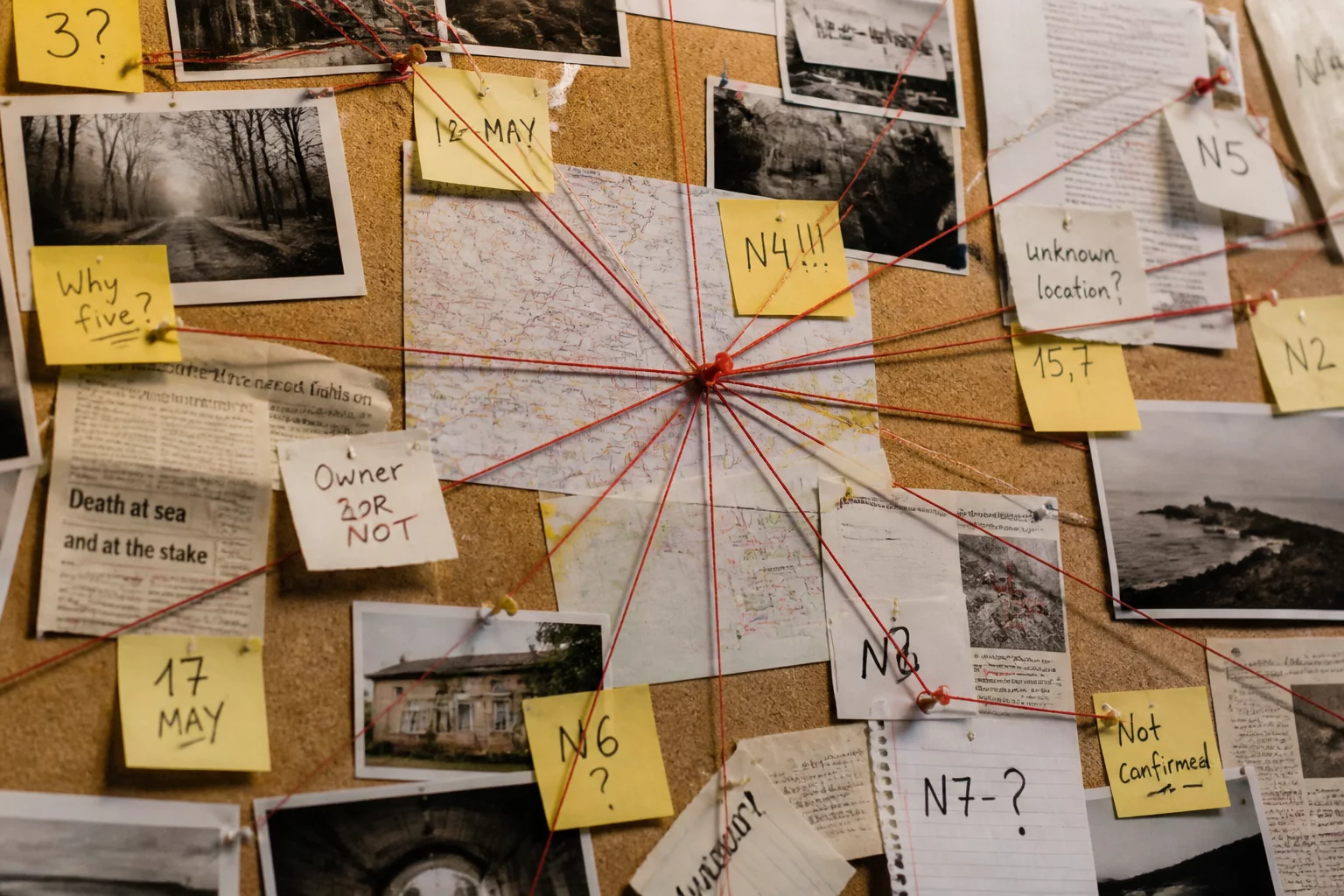
Tracing assertions through secondary reporting back to primary datasets and institutional origins.
Explore real-world case breakdowns illustrating query route drifts, primary source verification paths, and evidence evaluation methodologies.

Tracing multi-outlet verification networks, coordinated inquiry patterns, and real-time validation trails across high-velocity claims.

Tracking aviation safety filings, architectural site logs, and public registry disclosures to connect disparate incident variables.

Deconstructing international survey data, consumption metrics, and video platform shifts using structured data-harvesting routes.

Investigating cross-jurisdictional indictments, telemedicine data flows, and court filing repositories during legal research.