
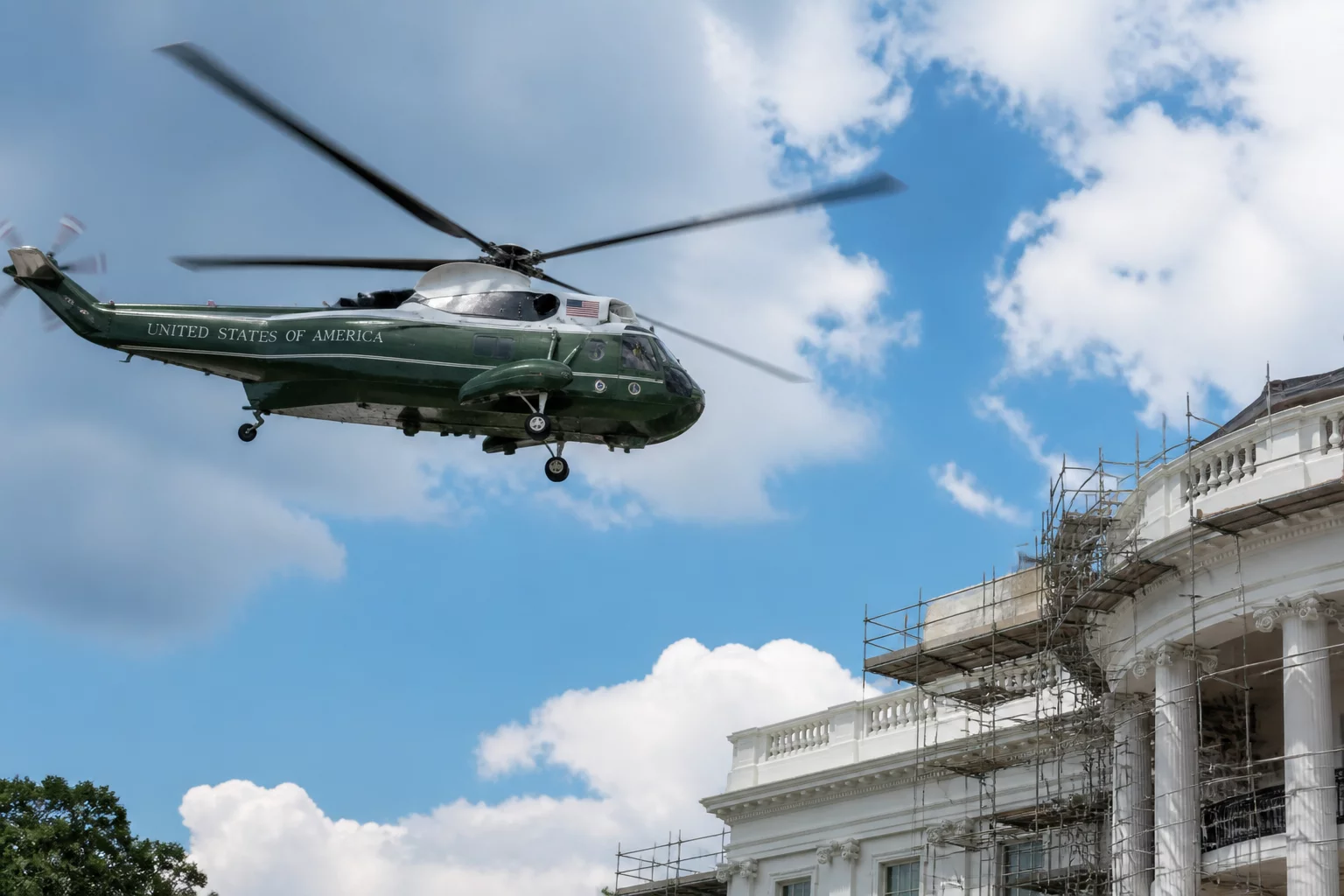
During routine transport maneuvers over the executive complex, Marine One encountered unexpected aerodynamic turbulence linked directly to temporary perimeter scaffolding and construction dust barriers.
Investigators from the National Transportation Safety Board (NTSB) conducted a multi-stage aerodynamic and ground-log audit to determine whether temporary structures on the South Lawn disrupted localized airflow patterns. Initial flight telemetry indicated rapid fluctuations in tail-rotor efficiency as the presidential helicopter descended near the active construction boundary. Subsequent wind tunnel simulations confirmed that high-tensile safety netting and solid barricades generated micro-vortices across the primary approach path.
Aerodynamic Disruption and Ground Barrier Analysis
Further inspection revealed that construction dust screens diverted thermal updrafts from ground generators, creating unstable shear layers within thirty feet of the touch-down marker. The NTSB report underscores the vital necessity of integrating civil engineering site modifications into real-time presidential aviation safety protocols. Researchers mapped these findings through public filings, telemetry transcripts, and federal airspace logs to reconstruct the complete inquiry trail.
Key Investigation Parameters
- Primary Agency: NTSB / USMC HMX-1
- Investigation Scope: South Lawn Micro-vortex Shear
- Root Mechanism: Thermal Barrier Deflection
- Remediation Action: Barrier Reconfiguration
The NTSB analysis established a direct causal relationship between temporary South Lawn civil construction barriers and localized aerodynamic anomalies affecting low-altitude rotorcraft control during approach maneuvers.
Peer Review Comments
Verified DialogueRingo Starr
Verified ParticipantPeer Reviewer
The construction details were surprising.
Mick Jagger
Verified ParticipantResearch Fellow
Well researched route.
Join the Technical Review